Ceiling Leak Water Damage in Converse, TX
A spreading stain overhead means water from a roof, an upstairs line, or the HVAC. The restoration team traces the true source, releases the trapped water, and dries the drywall, 24/7 across Converse.
(210) 972-3919Tap the 24/7 Converse dispatch line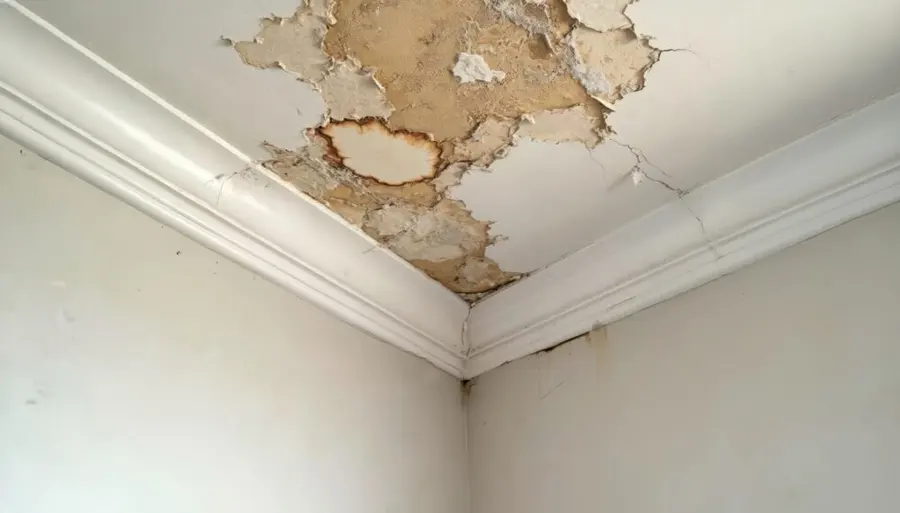
Why Converse calls the local water damage pros first
Rapid local response
The response team answers 24/7, and the nearest crew heads out the moment you call, day or night, across Converse and northeast Bexar County.
IICRC S500 drying standard
The drying team runs truck-mounted extractors, air movers, and moisture meters and dries to a verified standard, not a mop and a box fan.
Claim-ready documentation
The mitigation team documents the loss with photos and daily moisture readings, the paperwork an adjuster needs to move a claim.
South Texas water experts
Flash Flood Alley creeks, clay slab leaks, freeze breaks, hail roof leaks, and AC overflow, so the local pros know how water moves in a Converse home.
What to do right now for ceiling leak water damage in Converse
- Move furniture and electronics out from under the stain
- Put a bucket or bin under any active drip
- Relieve a bulging ceiling with a small hole at the low point if safe
- Photograph the damage for your claim
- Call the 24/7 line to trace the source and dry it
What does ceiling leak water damage cost in Converse, TX?
In Converse, TX, ceiling leak water damage typically runs $1,000 to $5,500, depending on the source, how far the water tracked, and how much drywall and insulation is affected.
Single spot
- One ceiling area
- Source stopped and dried
- Minor drywall
Spread damage
- Water tracked along framing
- Insulation removed and dried
- Some rebuild
Extensive
- Large ceiling area down
- Full dry-out and rebuild
- Documented loss
Documentation for your insurance claim
A sudden, accidental water loss is usually covered. The restoration team documents the loss with photos and daily moisture readings, the paperwork an adjuster looks for. Coverage depends on your policy, so it is worth checking with your own insurer. Want a number first? Try the Water Damage Cost Calculator for a Converse range.
How ceiling leak water damage is handled in Converse
Call and dispatch
The response team answers 24/7, and the nearest Converse crew heads out with pumps, air movers, and moisture meters.
Assess and stop it
The crew finds the source and the full reach of the water, including what soaked into slab, subfloor, and wall cavities.
Extract and dry
The extraction crew pulls the standing water, then runs air movers and dehumidifiers to a verified dry standard, not just the surface.
Verify and document
The drying team logs moisture readings until the structure is dry, then documents the loss with the photos and readings an adjuster needs.
A ceiling stain is water announcing itself after it has already traveled. The water enters somewhere above, runs along the framing, and drops through the drywall at the low point, which is rarely under the actual source. In a Converse home the water above your ceiling usually comes from one of three places, and tracing which one is the first job before any drying starts.
Where the water above your ceiling comes from
The crew traces the stain back to its real source:
- A roof or storm leak letting rain into the attic
- A supply or drain line from an upstairs bathroom or the attic
- An AC condensate line or a rusted drain pan overflowing
- A failed shower pan or a tub drain on a second floor
If it traces to the roof, see roof and storm leak water damage. If it is the air handler, see AC condensation and overflow cleanup. The crew finds the source first so the ceiling does not stain again after drying.
The ceiling leak response
The restoration technicians relieve the water and dry from above:
- Find and stop the source, then contain the area below
- Release trapped water through small controlled openings so the ceiling does not collapse
- Remove wet insulation and dry the drywall, framing, and the space above
- Monitor moisture to a verified dry reading and document the loss
Ceiling stain spreading or dripping? Put a bucket under it and call. A Converse crew heads out, day or night.
Call (210) 972-3919Why a small stain is a bigger problem
A damp ceiling cavity in the South Texas heat can start growing mold within a day or two, which is why the Centers for Disease Control and Prevention stresses drying wet materials quickly in its guidance on mold and moisture. The Federal Emergency Management Agency also has home protection resources for water intrusion. The crew dries the whole wet area, not just the visible stain.
A bulging ceiling is holding water
If your ceiling is sagging or bulging, it is holding pounds of water. If you can safely reach it, poke a small hole at the low point to drain it into a bucket, which prevents a sudden collapse. Then call the 24/7 line to dry it out.
From Converse across northeast Bexar County
Converse water damage pros respond across every Converse ZIP and out into the county, day or night.
Converse water damage pros cover the whole city and out across northeast Bexar County, day or night, with rapid local response.
Coverage runs across Converse, Universal City, Schertz, Live Oak, Kirby, Selma, Cibolo, Windcrest, and NE San Antonio.
See every neighborhood and ZIP covered ›Related restoration services
Ceiling leak questions, answered in Converse
Water in your home right now?
Do not wait for the FAQ. A Converse restoration team is standing by 24/7.
(210) 972-3919 Talk to a Converse crewHow do you find where a ceiling leak is coming from?
Water travels before it drops, so the stain is rarely under the source. The crew uses moisture meters and thermal imaging to trace it back, checking the roof, the plumbing lines, and the AC system above the ceiling before drying starts.
Is the ceiling going to collapse?
A sagging or bulging ceiling is holding water and can fall. If you can safely reach it, relieve it with a small hole at the low point into a bucket. Stay out from under a heavy bulge and call the 24/7 line right away.
Can you save the ceiling or does it all come down?
The crew can often dry the drywall in place and save most of it, especially with a fast response. Where the drywall is saturated or sagging it comes out, but the crew removes only what must go and documents it for the claim.
Is a ceiling leak covered by insurance?
If the source is sudden and accidental, like a storm roof leak or a failed line, the resulting water damage is usually covered. The crew documents the source and the drying for your carrier.
How long does a ceiling take to dry?
Most ceiling and attic dry-outs take three to five days with air movers and dehumidifiers, longer if the insulation was saturated. The drying team takes daily readings and stops only when the framing and drywall are verified dry.
A Converse crew is standing by
Water sitting means damage spreading. Call Converse Water Damage Restoration and a crew heads out across Converse and northeast Bexar County, day or night.
(210) 972-3919Call now, a crew picks up day or night